Expert root canal treatment in Wandsworth: what to expect
Dr Spencer Richman, root canal expert at Bellevue Dental, explains how modern root canal treatment works, why CBCT scanning matters before any treatment begins, what happens at each stage, and what it costs in Wandsworth.
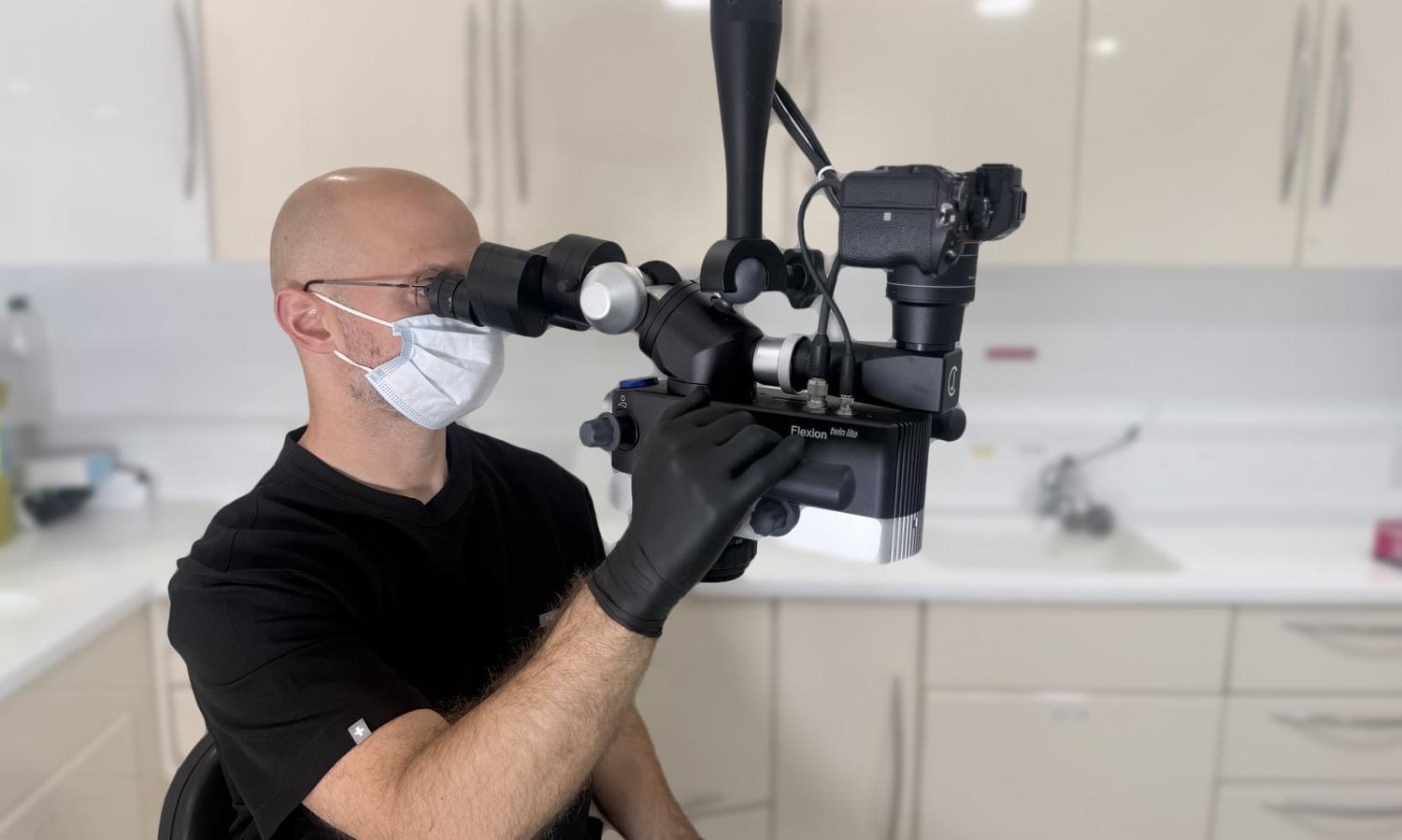
Few phrases make a patient's heart sink like "you need a root canal". After many years devoted almost entirely to endodontics, I can tell you that the reputation is badly out of date. Done well, with the right diagnosis, the right equipment and the right hands, root canal treatment is a calm, predictable way to get you out of pain and keep your own tooth for decades. This guide explains what root canal treatment actually is, how we diagnose it properly at Bellevue Dental in Wandsworth Common, what happens at each stage, and what to expect afterwards.
Understanding root canal treatment
Root canal treatment, also called endodontic treatment, deals with the soft tissue inside a tooth. That tissue, the pulp, contains the nerves and blood vessels that kept the tooth alive while it was developing. When deep decay, a crack, trauma or repeated dental work lets bacteria reach the pulp, it becomes inflamed and then infected. That is what causes the throbbing, the sensitivity and, eventually, the abscess.
The treatment removes the infected pulp, cleans and shapes the fine canals inside the roots, disinfects them thoroughly and seals them so bacteria cannot return. The tooth is then restored, usually with a crown, so it can go back to full chewing duty.
It is worth saying plainly: a root canal is not what causes the pain. It is the treatment that stops it. The alternative to treating an infected tooth is losing it, and the sooner the tooth is treated, the more predictable the outcome.
Signs you may need a root canal
Not every toothache needs endodontic treatment, but some patterns are hard to ignore:
- Pain on biting or pressure, from a dull ache to a sharp jolt that makes you chew on the other side.
- Lingering sensitivity to hot or cold, especially heat, that carries on well after the food or drink has gone. Sensitivity that fades in a few seconds is usually something simpler; sensitivity that lingers for minutes is a warning sign.
- Pain that wakes you at night or arrives spontaneously without any trigger.
- A tooth that has darkened compared with its neighbours.
- Swelling of the gum, or a small pimple-like spot on the gum near the tooth that comes and goes. That is a draining abscess, and it needs attention even if it does not hurt.
If you recognise any of these, the right move is an assessment rather than waiting to see whether it settles. Infections of this kind do not resolve on their own; antibiotics only calm them temporarily.
Getting the diagnosis right: CBCT scanning
This is the part of root canal treatment that patients rarely hear about, and in my experience it is the part that most often decides whether treatment succeeds.
A standard dental X-ray is a flat, two-dimensional shadow of a three-dimensional tooth. It can miss a fourth canal in a molar, a curved or calcified canal, a fine crack, or an area of infection sitting behind the root. Treating what you can see while missing what you cannot is one of the main reasons root canals fail.
At Bellevue we have an in-house CBCT scanner (cone beam computed tomography). It produces a detailed 3D image of the tooth, its roots and the surrounding bone in a few seconds, with a very low radiation dose focused on the area we need. Before I touch a tooth I can see exactly how many canals it has, how they curve, where the infection sits and how much bone has been affected. For retreatments of a previous root canal, it shows what was missed the first time.
The scan also tells us when a root canal is not the right answer. If a tooth is cracked through the root, or the bone loss is too advanced, it is far better to know that before treatment than after. Because the scanner is on site, there is no referral to an imaging centre and no delay: we scan, diagnose and plan at the same visit.
The root canal procedure, step by step
Understanding what happens tends to take most of the anxiety out of it.
- Numbing. A local anaesthetic is placed and given time to work fully. The tooth is tested before we start. You should feel pressure and vibration, never pain. If you are very anxious, we can arrange treatment under IV sedation with our in-house sedationist.
- Isolation. A thin rubber sheet (a rubber dam) is placed over the tooth. It keeps saliva and bacteria out, keeps our disinfecting solutions in, and lets you relax your jaw and swallow normally.
- Access and cleaning. A small opening is made in the top of the tooth. Working under a dental operating microscope, the infected pulp is removed and each canal is measured, shaped with fine flexible instruments and irrigated with disinfectant to kill the remaining bacteria. The microscope is what lets us find and treat canals that are invisible to the naked eye.
- Sealing. The cleaned canals are filled and sealed with gutta-percha, a biocompatible material that blocks bacteria from re-entering. Where a tooth has a very stubborn infection, an antibacterial dressing is placed and the canals are sealed at a second visit.
- Restoring the tooth. A root-treated back tooth is more brittle than a live one, so a crown is usually recommended to protect it. At Bellevue crowns are designed and milled in-house, so in many cases the tooth can be treated and crowned on the same day rather than over three appointments.
Why an expert makes the difference
A straightforward front tooth with one canal is well within the skills of a good general dentist. Molars are a different matter: three or four canals, often curved, sometimes calcified, occasionally with a canal that branches unexpectedly. Retreating a failed root canal, removing a fractured instrument or treating a tooth with a large abscess adds further complexity.
A root canal expert does this work every day, with equipment designed for it: the operating microscope, CBCT imaging, ultrasonic instruments and modern nickel-titanium file systems. That combination is what lifts success rates and reduces post-operative discomfort. It also means fewer visits: most of my cases are completed in a single appointment.
Rather than sending patients across London, Bellevue offers this level of care in-house. You are seen by the same team who know your history, and your own dentist stays involved in the final restoration.
What to expect at your appointment
Your first visit is a consultation. We talk through your symptoms and medical history, examine the tooth, test how it responds to cold and gentle pressure, and take a CBCT scan where indicated. You leave with a clear diagnosis, an honest view of the tooth's prognosis, a bespoke written plan and an exact fee. Nothing is started until you are comfortable with it.
Treatment itself usually takes between 60 and 90 minutes, longer for complex retreatments. You can drive home afterwards unless you have had sedation. We give you written aftercare instructions and you can contact the practice directly if you have any concerns in the following days. A short review is booked to check healing, and if a crown is planned we schedule it (or complete it on the day).
Aftercare and recovery
Most patients are back to normal within a day or two. Some tenderness on biting for a few days is normal while the tissues around the root settle, and is well controlled with ordinary over-the-counter pain relief such as ibuprofen or paracetamol, taken as directed.
- Avoid chewing on the tooth until it has been permanently restored, and steer clear of hard or sticky foods for the first few days.
- Brush and floss as normal, being gentle around the treated tooth.
- Keep your review and crown appointments. A root-treated tooth left with only a temporary filling is at real risk of fracturing or becoming re-infected.
- Contact us if pain is increasing after 48 hours, if swelling develops, or if your bite feels high.
Longer term, a well-treated and well-restored tooth should last as long as any other. Regular check-ups and hygiene visits are what protect that investment.
Common myths about root canals
"Root canals are agony." With modern anaesthesia and technique, the treatment itself is no more uncomfortable than a filling. The pain people remember is the pain of the infection beforehand, which the treatment removes.
"Root canals make you ill elsewhere in the body." This idea comes from research a century old that has been thoroughly discredited. Current evidence is clear that removing an infection from a tooth is good for your general health, not bad for it.
"It's easier just to take the tooth out." Extraction is quicker on the day, but it leaves a gap. Neighbouring teeth drift, bone shrinks, and replacing the tooth with an implant or bridge costs considerably more than saving it. Keeping your natural tooth is almost always the better long-term option when the tooth is restorable.
How to choose the right root canal expert in Wandsworth
Ask a few direct questions. Does the clinician use a microscope for every case? Do they have access to CBCT imaging, and will they use it to plan complex cases? How many root canals do they carry out each week? Are they GDC registered, and do they have postgraduate training in endodontics? Will they give you a written plan with a fixed fee before starting, and tell you honestly if a tooth is not worth saving?
Pay attention, too, to how you are listened to at the consultation. A good clinician takes the time to explain what they have found and why they are recommending what they recommend. You should leave feeling informed rather than hurried.
The cost of root canal treatment in Wandsworth
Fees vary with the tooth being treated and the complexity of the case, which is why we give an exact figure only after examining you. As a guide, at Bellevue a root canal consultation is £150 and a full investigation including a CBCT scan is £250. Expert-led root canal treatment starts from £1,200, with retreatment of a previous root canal from £1,250 and surgical endodontics from £1,300. A same-day in-house crown to protect the tooth is from £1,250. Every plan is bespoke and personal to you, and you will always know the cost before treatment begins.
It is a real investment, so it helps to see it in context: it is significantly less than replacing a lost tooth with an implant, and you keep your own tooth. 0% and low-cost finance is available through Tabeo for larger plans, and our full guide fees are published here.
Why you shouldn't delay
An infected tooth does not improve with time. Left untreated, the infection spreads into the surrounding bone, the pain becomes harder to control and the tooth becomes harder, and sometimes impossible, to save. Occasionally an untreated dental abscess becomes a genuine medical emergency.
Treated promptly, by an experienced clinician with proper diagnostic imaging, root canal treatment has a very high success rate and is far more comfortable than most people expect. If a tooth has been bothering you, do not let an out-of-date reputation stop you from getting it looked at. Read more about root canal treatment at Bellevue Dental, or contact the practice to arrange a consultation.
About the author

Dr Spencer Richman is the in-house root canal expert at Bellevue Dental, Wandsworth Common. His practice is devoted to endodontics: microscope-assisted root canal treatment, retreatment of failed cases and surgical endodontics, planned with in-house CBCT imaging. He also co-founded the dental education group Building Better and teaches single-visit endodontic and restorative techniques to other dentists. Find out more at spencerrichman.co.uk.