If the thought of the dentist makes your shoulders tense, you are far from alone — and you don’t have to keep putting it off. At Bellevue Dental we offer intravenous conscious sedation with our in-house sedationist, so anxious patients can have the treatment they need calmly, comfortably, and often in a single visit.
Book a consultationHow sedation worksSedation dentistry uses medication to help you relax deeply during dental treatment. It is sometimes called “sleep dentistry”, though that isn’t quite accurate: with conscious sedation you remain awake and able to respond, but in a state of calm, drowsy relaxation — and most people remember little or nothing of the appointment afterwards.
Sedation is used alongside normal local anaesthetic, not instead of it. The anaesthetic numbs the tooth; the sedation takes away the anxiety and stress that can make everything feel worse. Together they turn a procedure you have been dreading into one that simply passes.
Knowing what to expect is half the battle. Once patients understand how sedation works and who is looking after them, most find they can approach their appointment with a sense of calm they didn’t think was possible.
Dental anxiety stops many people seeking treatment until a small problem has become a painful, expensive one. Sedation makes those visits manageable, so you receive the care you need without the stress.
Because you are relaxed, your dentist can often complete several procedures in a single sitting — fewer appointments, less time in the chair, and far less to dread in the diary.
Anxiety amplifies the perception of pain. Removing it, on top of local anaesthetic, means a more comfortable experience — and patients who keep coming back for the routine care that protects their oral health long-term.
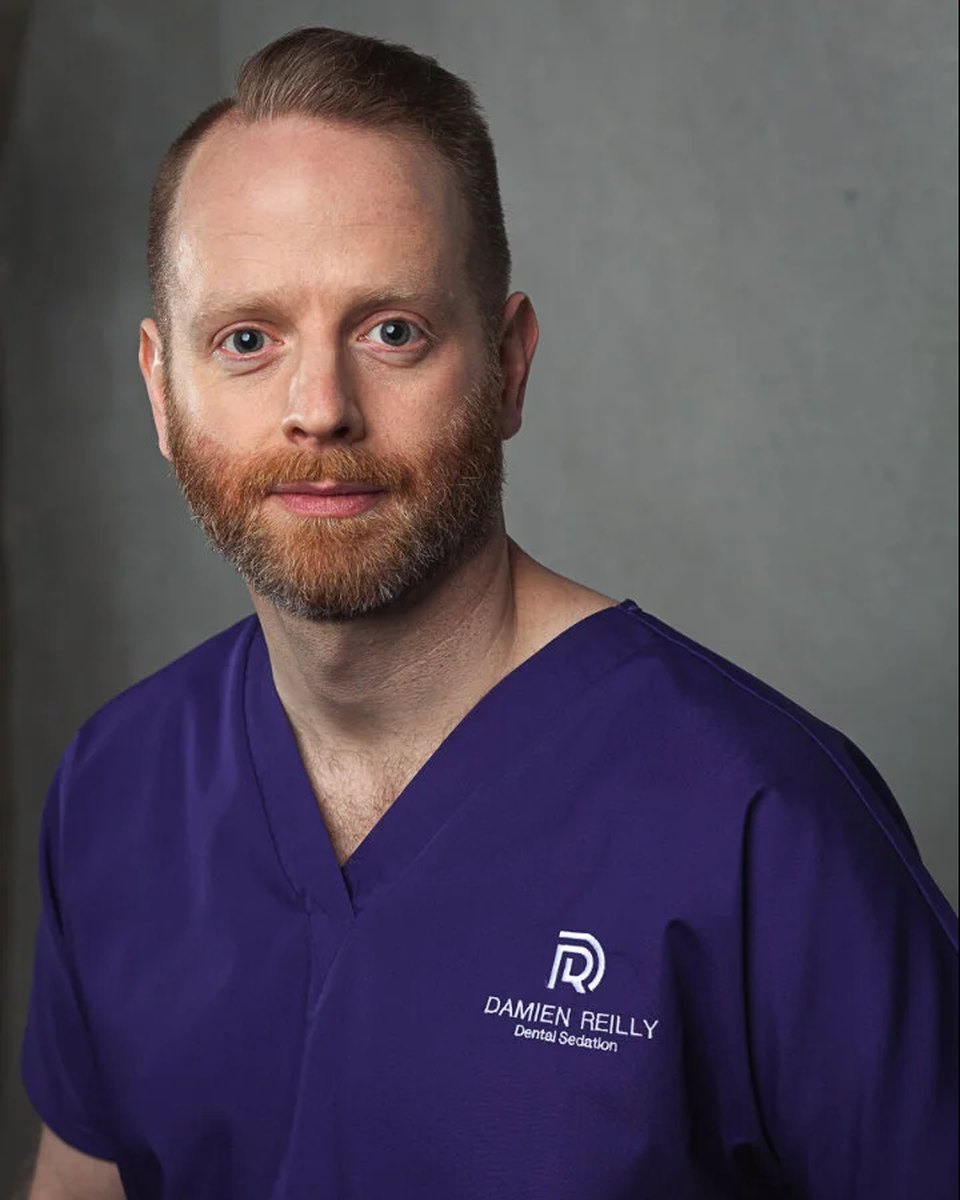
Sedation is only as safe and as calm as the person delivering it. At Bellevue, intravenous sedation is provided by Damien Reilly, an experienced consultant sedationist who works alongside our dentists in the practice. Damien takes full ownership of the sedation side of your appointment — assessing you beforehand, administering and adjusting the sedation, and monitoring you continuously — so your dentist can concentrate entirely on your treatment.
His whole approach is built around making dentistry accessible for anxious and complex patients: relieving anxiety, easing a strong gag reflex, and making longer or more involved treatment straightforward to get through.
About Damien Reilly →
Sedation in dentistry ranges from mild relaxation to deep sedation on the edge of sleep. Understanding the options helps you and your dentist choose the right approach for your anxiety, your medical history and the treatment planned.
Nitrous oxide (“laughing gas”) breathed through a small nasal mask. It gives mild relaxation while you stay fully conscious, and the effects wear off within minutes — you can usually drive yourself home. Best suited to mild anxiety and shorter treatments.
A prescribed tablet, such as a benzodiazepine, taken shortly before your appointment. It provides moderate relaxation and drowsiness — you stay awake but are much less aware of what is happening. Its depth is harder to fine-tune, and you will need someone to take you home.
The sedative is given through a small cannula in the back of the hand or arm, so the level of sedation can be controlled precisely and adjusted throughout treatment. You drift into deep relaxation — many patients doze — yet remain able to respond, and most remember very little afterwards. It is the most reliable option for significant anxiety, longer treatments and complex cases.
Fear of the dentist is the most obvious reason to choose sedation, but it helps a much wider group of people than you might expect.
If even a routine check-up is a source of real stress, sedation lets you have the care you need without the overwhelming fear that has been keeping you away.
Some people still feel discomfort despite local anaesthetic, or find impressions, X-rays and back-tooth treatment trigger gagging. Sedation relaxes the muscles and lowers the perception of pain, making these treatments possible.
Implants, multiple extractions, wisdom teeth, or a full course of restorative work can all be completed in far fewer sittings under sedation — ideal if you have a busy schedule or struggle to sit still for long periods.
The goal is simple: to get you through the treatment you need with the least stress possible, and to help you stop avoiding the dentist for good.
It starts with a conversation. Your dentist reviews your medical history, discusses the treatment you need and how you feel about it, and confirms that sedation is suitable for you. Be open about any medications, health conditions or previous experiences of sedation — it is what keeps you safe.
You will be given clear written instructions: when to stop eating and drinking beforehand, which medications to take or pause, and the need to bring a responsible adult who can take you home and stay with you afterwards.
Damien places a small cannula and administers the sedation, which takes effect within a couple of minutes. Once you are relaxed, local anaesthetic is given and treatment begins. Your breathing, oxygen levels and heart rate are monitored throughout, and the sedation is adjusted as needed to keep you comfortable.
You rest in the practice under supervision until you are ready to leave with your companion. You may feel drowsy for the rest of the day, so plan to take it easy. We’ll send you home with aftercare instructions and a number to call if you have any concerns.
In experienced hands, yes. Intravenous conscious sedation is a well-established technique with an excellent safety record when it is delivered by a trained sedationist, with proper assessment beforehand and continuous monitoring throughout. That is exactly why we work with a dedicated sedationist rather than asking the treating dentist to manage both.
Because the sedative is given intravenously, its effect can be controlled precisely and increased or reduced in real time. Emergency equipment and reversal medication are on hand as a matter of routine. Side effects are usually mild and short-lived — drowsiness, a dry mouth, or patchy memory of the appointment — and the effects of the sedative can last several hours, which is why you must not drive, operate machinery, drink alcohol or sign important documents for 24 hours afterwards.
If you have a medical condition, are pregnant, or take regular medication, tell us at your consultation. Sedation is not right for everyone, and we will only recommend it when it is safe to do so.
Not fully. With conscious sedation you remain able to respond to your dentist, but you’ll be deeply relaxed and drowsy — many people doze off — and most remember little or nothing of the appointment afterwards. It is not a general anaesthetic.
No. Sedation is given alongside normal local anaesthetic, which numbs the area being treated. The sedation removes the anxiety and awareness; the anaesthetic removes the sensation.
No. After IV sedation you must be collected by a responsible adult and should not drive, work, drink alcohol or make important decisions for 24 hours. We will not start sedation unless your escort is confirmed.
Almost anything — from a long-avoided check-up and clean to fillings, root canal treatment, extractions, wisdom teeth and implants. Sedation is especially useful when several procedures can be combined into one visit.
Sedation is charged in addition to your treatment and depends on the length of the appointment. We’ll give you a written quote at your consultation, and finance is available on treatment plans over £250 — see our fees page.
Your dentist carries out the treatment while our in-house sedationist, Damien Reilly, administers and monitors the sedation from start to finish. Having a dedicated sedationist in the room is the safest way to deliver IV sedation.
A consultation is just a conversation — no treatment, no pressure. Tell us what worries you and we’ll work out together how sedation can make your dental care comfortable and stress-free.
Book a consultationContact the practice